
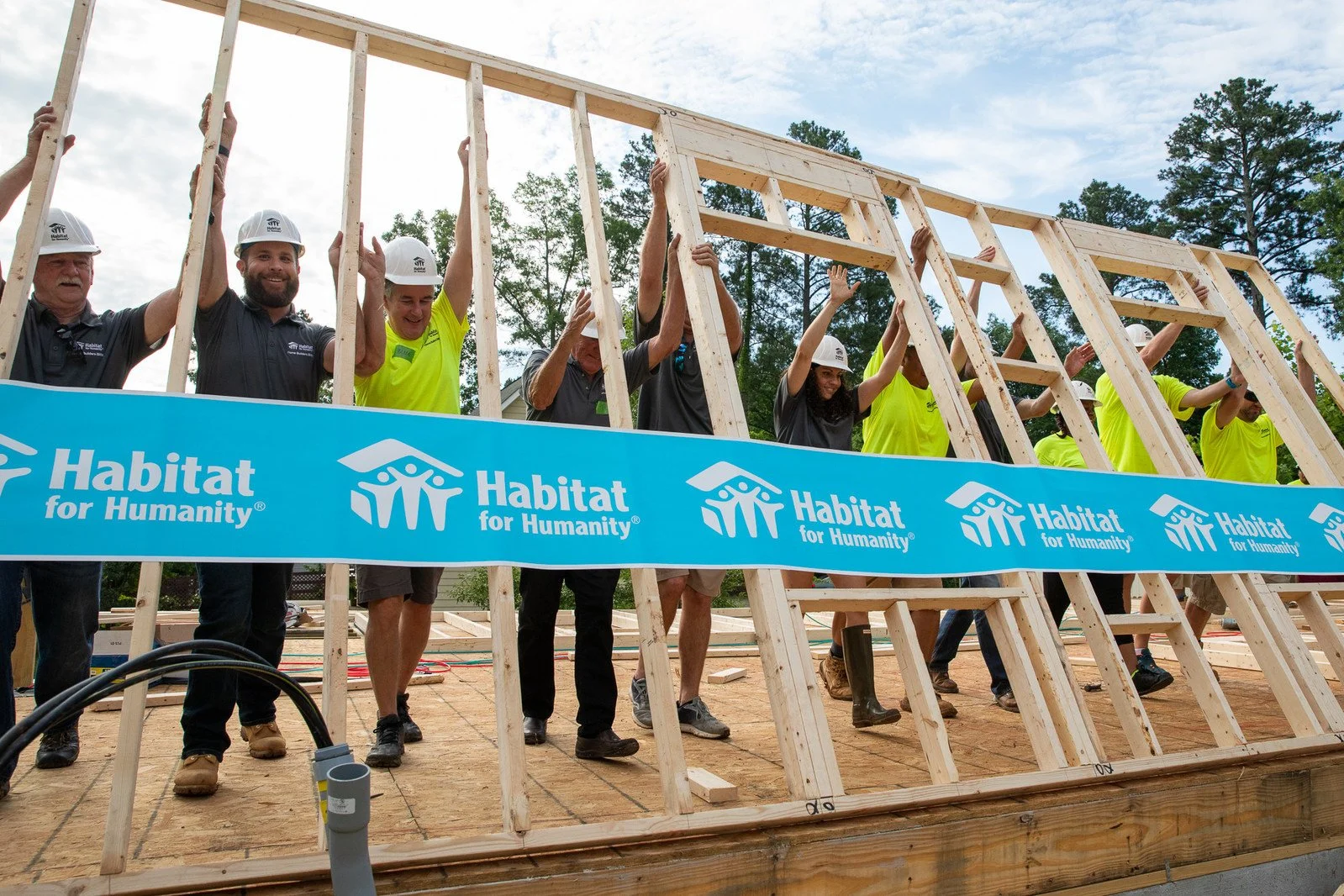
How Habitat makes an impact
Mecosta County Habitat for Humanity (MCHFH) has created measurable, long-term benefit for Mecosta County through both homeownership and critical repair programs. Since 1992, MCHFH has partnered with 37 families, building 31 homes and rehabilitating 6 existing houses. Since launching the Critical Home Repair and Veterans program in 2015, the organization has completed over 120 critical home repairs, including support for veteran households. Altogether, that represents a substantial number of housing interventions that have improved safety, stability, and quality of life for county residents.
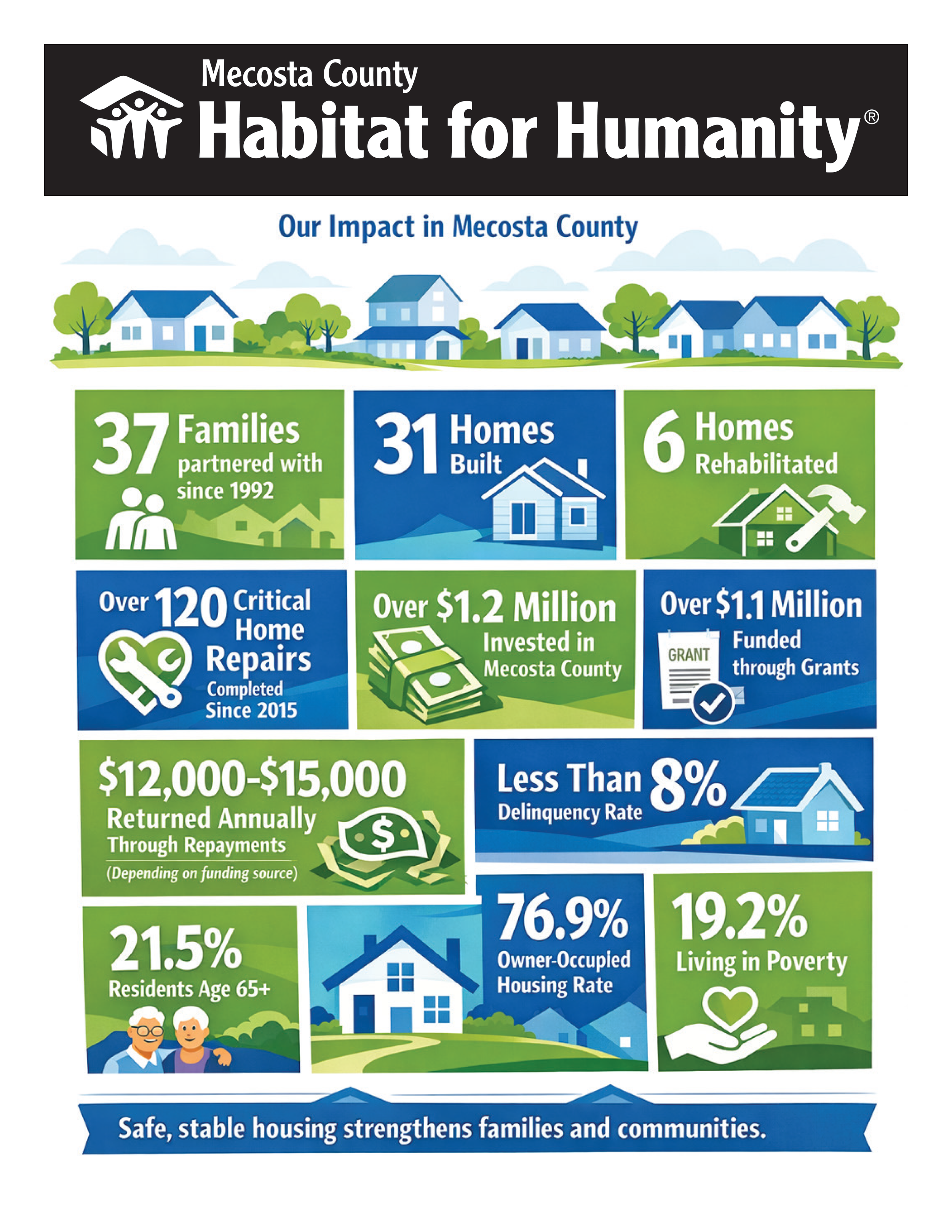
37 families partnered with through affordable homeownership opportunities since 1992.
31 new homes built and 6 homes rehabilitated, helping families secure stable, decent housing.
Over 120 critical home repairs completed since 2015, strengthening housing stability for low-income homeowners across Mecosta County.
Over $1,200,000 invested directly into Mecosta County through repair projects, with over $1,100,000 funded through grants.
Between $12,000 and $15,000 is returned to the program annually through repayments, depending on the funding source.
Less than 8% delinquency rate, demonstrating strong homeowner commitment and program accountability.
Older adults represent a significant share of local housing need, with 21.5% of Mecosta County residents age 65 and older and a 76.9% owner-occupied housing rate countywide.
These results show that MCHFH is doing more than repairing houses—it is preserving homeownership, preventing displacement, and protecting neighborhood stability across Mecosta County. The homeownership program gives families a path to affordable ownership, while the Critical Home Repair and Veterans program helps existing homeowners remain safely in their homes when urgent repairs would otherwise be unaffordable. This is especially important in a county where 19.2% of residents live in poverty and where many eligible households fall below 80% of area median income.
MCHFH’s impact has been made possible in part through grant funding and the careful recycling of local dollars. While we have relied on grant funding in the past, securing those funds is becoming more difficult, and the need for community support is becoming more urgent. Continued local investment will help MCHFH address critical housing problems, preserve affordable homeownership, and strengthen the long-term health, safety, and resilience of Mecosta County communities, including many older homeowners who need support to remain safely in place.